Your Inbox, Your Rules: How Wizz App Gives You Total Control Over Who Can Message You
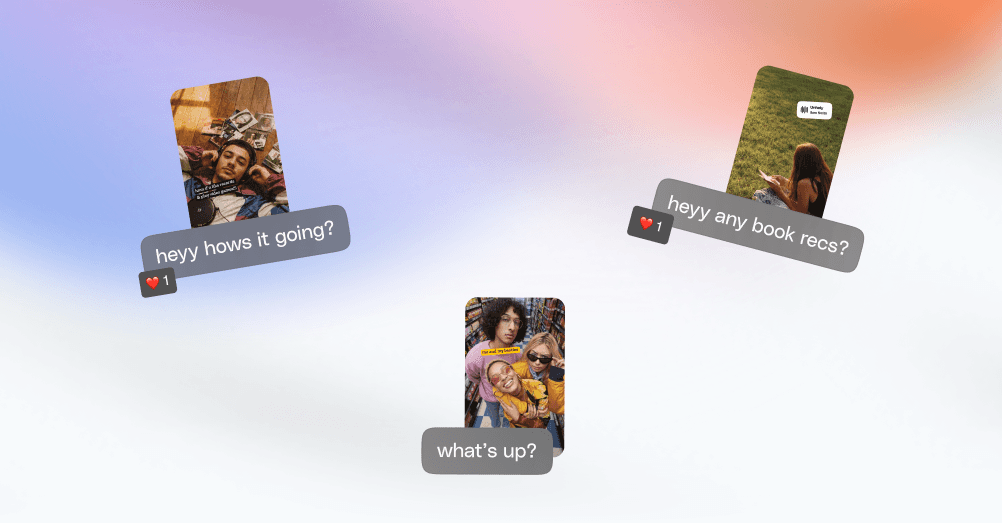
Most social apps treat your inbox as open by default. Anyone who finds your profile can message you. The burden of filtering, blocking, and managing that contact falls entirely on you - after the fact, after you've already seen something you didn't want to see.
This design isn't neutral. It disproportionately affects younger users, and it disproportionately affects women. Research consistently shows that unsolicited messages and unwanted contact online are experienced more acutely by college-age women - contributing to the kind of low-level digital anxiety that makes people retreat from online spaces altogether, or stop using apps that could otherwise help them build real connections.
The irony is that the people most likely to benefit from a safe space to meet new people are often the ones most put off by the design of the platforms that claim to offer it.
Wizz App decided that wasn't good enough.
How the Request tab works
On Wizz App App, nobody lands in your inbox without your permission. Full stop.
When someone wants to message you, their opening message sits in a separate Requests tab, not your main inbox. You see it only when you choose to. You read it on your own terms. And then you decide: accept, or don't.
If you accept, the conversation moves to your inbox and continues normally. If you don't, it disappears. No awkward blocking. No follow-up. No obligation to explain yourself.
That's it. That's the whole mechanic. And the simplicity of it is the point.
It means that every person in your Wizz App inbox is someone you chose. Not someone who found you before you could stop them. Not someone whose opening message you had to process before deciding whether you felt safe. Someone you looked at, made a call on, and said yes to.
That's a fundamentally different experience from what most social platforms offer. And for college-age users navigating new social environments — new cities, new campuses, new communities — that difference matters enormously.
Consent-first design isn't a feature. It's a philosophy.
Most apps add safety features after the fact. A block button here. A report function there. Reactive tools that respond to something that's already happened.
Wizz App built consent into the architecture from the start. The Request tab isn't a bolt-on. It's a core part of how the product works — because the team believes that the right to decide who enters your space shouldn't be something you have to fight for. It should be the default.
And the Request tab is just one layer. The content you receive on Wizz App is protected too. Bodyguard reviews all texts sent in real time, removing harmful content before it reaches you. Cinder scans all videos and images to ensure that what lands in your inbox is safe. Together, these tools mean that consent-first design extends beyond the inbox gate: even once you've accepted a conversation, you're still protected.
This is increasingly what users — particularly Gen Z users — are asking for from social platforms. Not just the ability to block bad actors after the fact, but structural design that prevents unwanted contact from happening in the first place. Consent-first social media. Platforms that treat user autonomy as a design principle, not an afterthought.
Wizz App is one of the very few social apps that has actually built this way.
What this means in practice for college students
Starting university is one of the most socially exposed moments in a person's life. You're putting yourself out there — joining new platforms, meeting new people, building a social world from scratch. That openness is necessary. It's also vulnerable.
For a lot of students, especially women in their first year, the anxiety of unsolicited online contact is a genuine barrier to using social apps at all. The upside of connection doesn't feel worth the downside of having to manage what comes with it.
The Request tab removes that barrier. You can put yourself out there — fill in your bio, join the community, be findable — without that meaning you're accessible to everyone, unconditionally.
You set the terms. You decide who gets in.
That's what makes Wizz App genuinely useful for building new friendships at university rather than just another platform you downloaded and quietly stopped using after the first week.
Safety and connection aren't opposites
There's a tendency to frame safety features as friction — things that make an app slightly less fun in exchange for being slightly less dangerous. Wizz App rejects that framing entirely.
The Request tab doesn't make connection harder. It makes it better. When you know that every conversation in your inbox is one you consented to, you show up to those conversations differently. More openly. With less guard. Because the filtering happened before the conversation started, not during it.
Real connection requires a degree of trust. Trust requires safety. And safety, on Wizz App, isn't something you have to build for yourself — it's built into the product before you even open it.
With over 16 million users across 20+ countries, Wizz App has shown that consent-first design and genuine community aren't in tension. You can have both. You should have both.
You decide who's in your world
If you've been put off social apps by the experience of unwanted messages — or if you've just quietly accepted that as the cost of being online — it doesn't have to be that way.
On Wizz App, your inbox is yours. Nobody enters it without asking first. And you never have to let anyone in who you don't want to.
That's not a feature we added. It's the way we think it should work.